
Natural First Aid Essentials for Home and Travel
- Sunny

- 5 days ago
- 12 min read
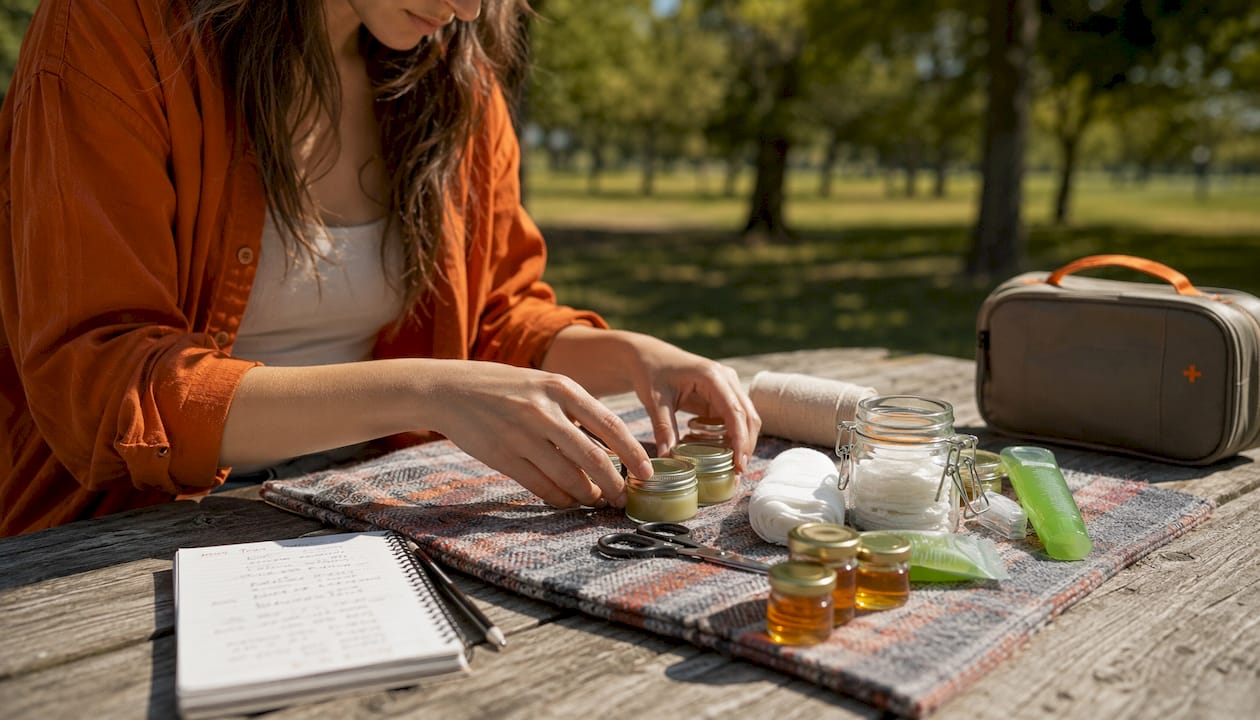
A ready-to-use natural first aid kit centers on four categories: plant-based topicals (aloe vera gel, calendula salve, raw honey), targeted herbals (plantain leaf, yarrow, arnica gel), basic medical supplies (sterile gauze, adhesive bandages, tweezers), and pain/anti-inflammatory support (willow bark, turmeric, arnica). Use these for minor cuts, burns, stings, and aches. Per Mayo Clinic red-flag guidance, natural remedies are adjuncts to professional care, not replacements — seek medical attention for deep wounds, severe burns, persistent bleeding, or signs of systemic infection.
Quick-grab essentials:
Aloe vera gel (burns, sunburn, skin irritation)
Calendula salve (cuts, scrapes, rashes)
Raw honey (wound dressing, sore throat)
Arnica gel (bruises, sprains, muscle pain)
Yarrow (styptic for minor bleeding)
Sterile gauze pads and adhesive bandages
Tweezers and small scissors
Table of Contents
What are the natural first aid essentials you actually need?
Which herbs and natural topicals work best, and how do you use them safely?
How do you pack a lightweight natural kit for travel and hiking?
What natural first aid items are safe for pets, and which ones to avoid?
How do you safely source and prepare natural first aid materials?
What hygiene practices prevent infection in natural first aid?
How often should you apply natural remedies, and in what amounts?
What are the natural first aid essentials you actually need?
A well-stocked kit pairs plant-based topicals with basic medical tools. Herbal preparations work best alongside gauze, bandages, and a thermometer — not instead of them.
Item | What It Treats | Best Form | Safety Note |
Aloe vera gel | Burns, sunburn, skin irritation | Fresh leaf or pure gel | Topical only; avoid on deep wounds |
Calendula salve | Cuts, scrapes, rashes, chapped skin | Salve or cream | Avoid if allergic to daisy family |
Raw honey | Wounds, sore throat, dry cough | Raw, unfiltered | Not for infants under 12 months |
Arnica gel | Bruises, sprains, muscle pain | Gel or cream | Topical only; never on broken skin |
Yarrow | Minor bleeding, insect bites | Dried herb or tincture | Avoid in pregnancy |
Plantain leaf | Stings, bites, splinters | Fresh poultice or dried | Patch-test for sensitivity |
Witch hazel | Cuts, scrapes, skin toner | Liquid | Topical only |
Sterile gauze | Wound dressing | Pads and rolls | Replace if packaging is compromised |
Tweezers | Splinters, ticks | Stainless steel | Sterilize before use |
Thermometer | Fever monitoring | Digital | Check calibration annually |
Pro Tip: Starting out? Build a beginner kit with just five items: aloe gel, calendula salve, raw honey, sterile gauze, and tweezers. For children, dilute any essential oil to 0.5–1% in a carrier oil and skip arnica on broken skin entirely.
How do you treat common mishaps with natural remedies?
Start with the right action first, then layer in plant-based support.
Cuts and scrapes
Rinse the wound under clean running water for 1–2 minutes to remove debris.
Pat dry with sterile gauze.
Apply a thin layer of raw honey or calendula salve to support moist wound healing.
Cover with an adhesive bandage or sterile gauze pad.
Change the dressing daily and monitor for redness, warmth, or swelling.
Burns (minor, superficial only)
Cool the area under cool (not ice-cold) running water for 10 minutes.
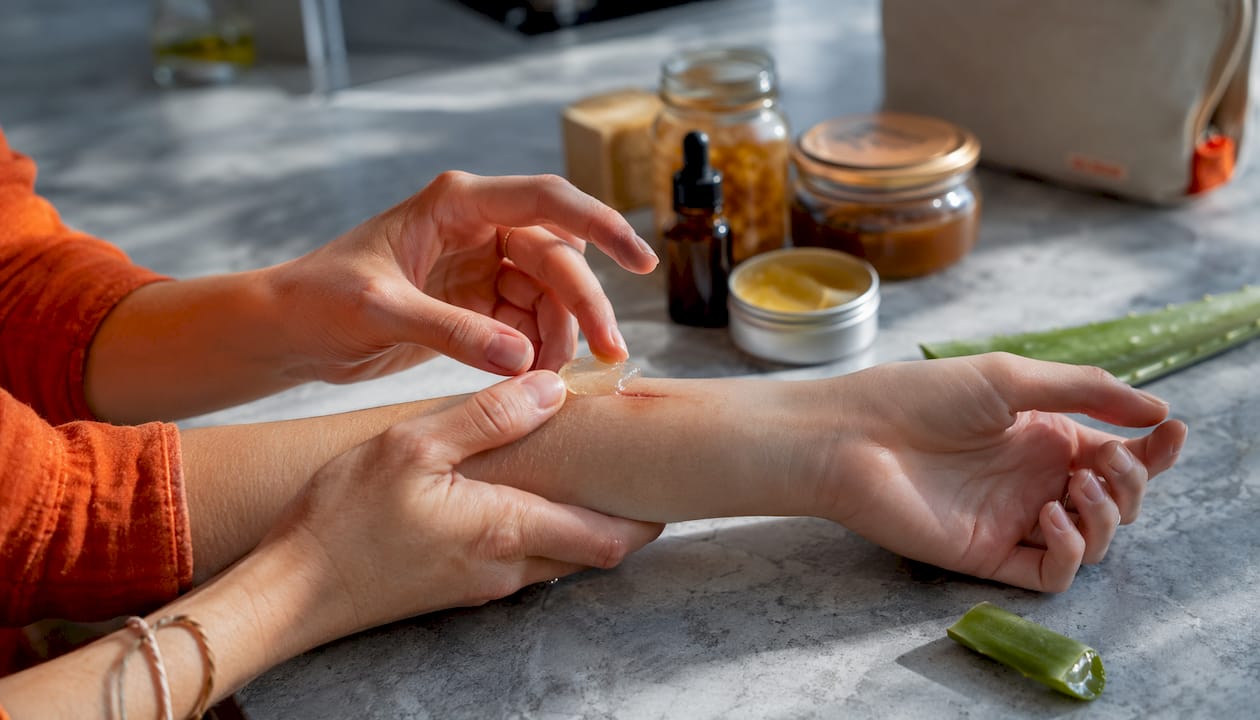
Apply pure aloe vera gel generously. For a step-by-step approach, Theregenstore’s herbal burn treatment guide clearly covers each stage.
Cover loosely with sterile gauze. Do not use butter, oil, or toothpaste.
Reapply aloe 2–3 times daily until healed.
Insect bites and stings
Remove the stinger with tweezers or by scraping sideways with a card.
Apply a fresh plantain leaf poultice (chew or crush the leaf, apply directly) or a dab of witch hazel.
A drop of diluted lavender essential oil (1% in carrier oil) can reduce itching and inflammation. Plant-based ingredients like calendula and chamomile also calm sting-related irritation effectively.
Monitor for 30 minutes for signs of allergic reaction.
Sprains and bruises
Apply the RICE method: Rest, Ice (wrapped in cloth), Compression, Elevation.
Once the skin is intact, apply arnica gel to the bruised area 2–3 times daily.
A comfrey salve can support soft-tissue recovery for closed injuries.
Minor bleeding and nosebleeds
Apply firm, steady pressure with sterile gauze for 5–10 minutes without lifting.
For nosebleeds, lean slightly forward and pinch the soft part of the nose.
Yarrow powder or a yarrow poultice is a traditional styptic for minor surface bleeding.
Stop home care and seek professional help immediately if: bleeding does not slow after 10 minutes of steady pressure; the wound is deep, jagged, or on the face; a burn covers a large area or involves blistering; you see increasing redness, red streaking, pus, or fever (signs of infection); or a sting causes difficulty breathing, throat tightening, or dizziness.
Pro Tip: Pair a sterile gauze barrier with a plant-based regenerative ointment for moist wound healing on clean, shallow cuts. Moisture supports faster skin repair without the petroleum found in conventional ointments.
Which herbs and natural topicals work best, and how do you use them safely?
Each herb has a specific role. Using the right form at the right dilution matters as much as choosing the right plant.
Calendula (salve or wash): supports wound healing and reduces inflammation; safe for sensitive skin; avoid if you have a daisy-family allergy.
Plantain leaf (fresh poultice): draws out toxins from bites and stings; one of the most accessible field remedies — it grows in most lawns.
Raw honey (topical layer): creates a protective, moist environment that resists bacterial growth; apply a thin layer to clean wounds and cover with gauze.
Arnica (gel or cream): reduces bruise discoloration and muscle pain; topical only and must never be applied to broken or open skin.
Yarrow (dried herb or tincture): traditional styptic; also mildly anti-inflammatory for skin.
Lavender essential oil: anti-inflammatory and antimicrobial; dilute to 1–2% in a carrier oil for adults. Do not apply undiluted. Avoid routine use on young children due to documented sensitization risk.
Tea tree oil: antibacterial and antifungal; dilute to 1–2%; toxic to cats — never use on feline skin.
Aloe vera gel: cools burns and supports collagen production; use pure gel with no added alcohol or fragrance.
Willow bark / turmeric: internal anti-inflammatory support; willow bark interacts with anticoagulants — consult a healthcare provider before use.
Item | Use Route | Age/Pregnancy Caution |
Arnica gel | Topical only | Avoid in pregnancy; never on broken skin |
Yarrow | Topical or tea | Avoid in pregnancy |
Lavender EO | Topical (diluted) | Avoid on young children; dilute to 0.5% for older kids |
Tea tree EO | Topical (diluted) | Avoid on cats; dilute to 1% for older children |
Raw honey | Topical or oral | Never give to infants under 12 months |
Willow bark | Oral (tea or capsule) | Avoid with blood thinners; avoid in children (aspirin-like compounds) |
Calendula | Topical | Patch-test if daisy/ragweed allergy present |
Allergy warning: Calendula, chamomile, arnica, and yarrow all belong to the Asteraceae (daisy) family. If you have a ragweed allergy, patch-test each one on your inner wrist and wait 24 hours before applying to a wound.
How do you pack a lightweight natural kit for travel and hiking?
Keep it compact. Every item should serve at least two purposes.
Concentrated calendula or multi-herb salve in a small tin (replaces multiple products)
Pure aloe vera gel in a travel-size bottle
Small amber dropper bottle with pre-diluted lavender oil (1–2% in jojoba)
Electrolyte tablets or powder (hydration is recovery)
Reef-safe mineral sunscreen (zinc oxide-based)
Natural insect repellent (citronella, eucalyptus, or lavender-based); field-tested plant-based options work well for outdoor use
Bandana (compress, sling, poultice wrap, or sun cover)
Sterile gauze pads and adhesive bandages
Tweezers
For air travel, keep liquids in small containers within airline liquid limits for carry-on. Pack salves and tins in carry-on; larger bottles go in checked luggage.
Pro Tip: Print a small card listing dilution ratios, red-flag symptoms, and emergency contacts. Laminate it and tuck it inside the kit. Under stress, even experienced people forget ratios.
How do you choose quality products and store them properly?
Label reading is the first filter. A trustworthy natural product lists full botanical names (e.g., Calendula officinalis, not just “calendula extract”), names its carrier oil, and discloses preservatives or lack thereof. Third-party testing or a clear sourcing statement adds confidence.
Choosing products — what to look for:
Full ingredient transparency with botanical Latin names
Cold-pressed carrier oils (jojoba, olive, or coconut)
No synthetic fragrances or parabens
Clear batch date and shelf-life information
Storage by form:
Salves and balms: store in airtight glass or metal tins, away from heat and light; shelf life 1–2 years.
Tinctures: amber glass dropper bottles, cool and dark; shelf life 3–5 years for alcohol-based.
Dried herbs: airtight glass jars, labeled with date; use within 1 year for peak potency.
Essential oils: amber glass, upright, away from sunlight; shelf life 1–2 years depending on the oil.
On ethical sourcing: avoid purchasing wild-harvested herbs from scarce or at-risk species. Instead, grow easy staples at home — calendula, yarrow, plantain, aloe, chamomile, and peppermint are all beginner-friendly and renewable.
Pro Tip: Label every container with the item name, date prepared or opened, and intended use. A small notebook inside the kit with application notes means anyone in your household can use it correctly.
What natural first aid items are safe for pets, and which ones to avoid?
Pets metabolize compounds differently than humans. What soothes your skin can harm your cat or dog.
Safe for common pet mishaps:
Raw honey: can be applied to superficial wounds on dogs (small amounts, topical)
Aloe vera gel (pure, no additives): soothing for minor skin irritation on dogs; avoid if the pet licks the area excessively
Calendula salve: gentle on dogs for minor cuts and rashes; patch-test first
Coconut oil: moisturizing for dry paw pads
Avoid entirely for pets:
Tea tree essential oil: toxic to cats and potentially dogs even in small topical amounts
Lavender essential oil: use with extreme caution around cats; avoid direct application
Yarrow: can be toxic to dogs and cats if ingested
Xylitol (found in some natural products): highly toxic to dogs
Theregenstore offers pet-safe natural healing guidance and product options formulated with animal safety in mind. Always patch-test any topical on a small area first and monitor for 24 hours. Keep the ASPCA Animal Poison Control Center number (888-426-4435) in your kit.
How do you safely source and prepare natural first aid materials?
Wild-harvesting requires positive plant identification before anything else. Misidentification is the most common and most serious risk in herbal first aid. Use a regional field guide alongside a plant identification app, and cross-reference at least two sources before harvesting anything.
Harvest from areas free of pesticides, herbicides, and vehicle exhaust. Collect only what you need, take no more than one-third of any stand, and leave the roots intact for perennials. Rinse harvested material thoroughly and dry it completely before storage to prevent mold.
For sourcing purchased herbs, look for suppliers who list their growing region, harvest method, and testing standards. Certified organic is a useful baseline, though small-batch ethical growers without certification can be equally reliable when they provide full transparency.
What hygiene practices prevent infection in natural first aid?
Clean hands before touching any wound. Wash with soap and water for at least 20 seconds, or use an alcohol-based hand sanitizer if water is unavailable. Sterilize tweezers and scissors with isopropyl alcohol before and after use.
Use sterile gauze for wound contact. Never reuse a dressing that has touched an open wound. Change dressings at least once daily, or sooner if they become wet or soiled. Keep the wound area dry between dressing changes. Watch for early infection signs: increasing warmth, redness spreading beyond the wound edge, swelling, or discharge.
How often should you apply natural remedies, and in what amounts?
Frequency and amount depend on the remedy and the injury.
Topical salves and honey: apply a thin layer (roughly the size of a dime for a small wound) 1–2 times daily after cleaning. More is not more effective.
Aloe vera gel: apply generously to burns 2–3 times daily; let it absorb before covering.
Diluted essential oils: 1–2% dilution means 6–12 drops of essential oil per ounce of carrier oil. Apply once or twice daily to intact skin only. For children ages 2–12, use 0.5–1% (3–6 drops per ounce).
Arnica gel: apply 2–3 times daily to bruised or strained areas; do not use on broken skin or for more than 10 consecutive days without a break.
Herbal teas for internal support (ginger, chamomile, peppermint): 1–2 cups per day is a reasonable starting point for adults. For children, reduce to half a cup and confirm safety for the child’s age.
For elderly adults, start with lower concentrations of essential oils (0.5–1%) and monitor for skin sensitivity. Avoid willow bark in anyone on blood-thinning medications.
What are the most common myths about natural first aid?
Myth 1: Natural means safe for everyone. Not true. Yarrow, arnica, and willow bark each carry real contraindications. “Natural” describes origin, not risk level.
Myth 2: Essential oils can be applied directly to skin. Most cannot. Undiluted application causes sensitization and, in some cases, chemical burns. The 1–2% dilution rule exists for a reason.
Myth 3: Honey heals infected wounds. Raw honey has antibacterial properties, but it is not appropriate for deep or already-infected wounds. Those require professional evaluation.
Myth 4: Herbal remedies work instantly. Most plant-based topicals support the body’s own repair process over days, not hours. Expecting immediate results leads to overuse or abandonment.
Myth 5: A natural kit replaces a conventional one. The most resilient approach combines both. Keep sterile bandages, antiseptic solution, and a pain reliever alongside your herbal supplies.
Natural remedies for minor illnesses beyond injuries
For colds and congestion, ginger tea (simmer 3–4 slices of fresh ginger in 2 cups of water for 10 minutes) soothes sore throats and supports circulation. Echinacea tincture, taken at the first sign of illness, may help the body mount a stronger immune response. Eucalyptus essential oil diluted in a carrier and applied to the chest, or used in a steam inhalation, can ease congestion.
For headaches, a peppermint essential oil roll-on (diluted to 2% in jojoba) applied to the temples and back of the neck offers cooling relief. Chamomile tea supports relaxation and can ease tension-related headaches.
For nausea, ginger in any form (tea, capsule, or a small piece of raw root) remains one of the most reliable natural options. Peppermint tea also calms digestive upset.
For sore throats, mix raw honey with warm water and a squeeze of lemon. Slippery elm lozenges coat and soothe irritated throat tissue.
Key Takeaways
A natural first aid kit works best when it pairs plant-based topicals with basic medical supplies and clear red-flag guidance for when to seek professional care.
Point | Details |
Core kit categories | Combine plant-based topicals, targeted herbals, basic tools, and sterile dressings for a complete kit. |
Dilution and safety | Dilute essential oils to 1–2% for adults and 0.5–1% for children; never apply arnica to broken skin. |
Storage and shelf life | Store salves and tinctures in airtight amber glass; label with date; replace dried herbs annually. |
Red flags for professional care | Seek care for bleeding that won’t stop, deep burns, spreading infection, or breathing difficulty after a sting. |
Theregenstore Re-gen ointment | A petroleum-free, plant-based topical option for moist wound support on clean, shallow cuts and skin recovery. |
Why a curated natural kit matters more than a generic one
Most people build their first aid kit reactively, grabbing whatever is on the pharmacy shelf after something goes wrong. A curated natural kit flips that. You know exactly what each item does, where it came from, and how to use it safely. That knowledge matters most when you are stressed and someone is hurt.
The value is not in having twenty herbs. It is in having five or six you understand well, stored correctly, and ready to use with confidence. Start small, learn each item, and expand from there. Theregenstore’s herbal first aid resources are a practical starting point for readers building that foundation.
A petroleum-free topical option worth keeping in your kit
If you prefer a ready-made plant-based ointment over assembling individual herbs, Theregenstore’s Re-gen ointment is a petroleum-free, chemical-free topical designed to support moist wound healing for cuts, scrapes, burns, and soft-tissue recovery. It contains no synthetic preservatives and is formulated for both human and pet use.
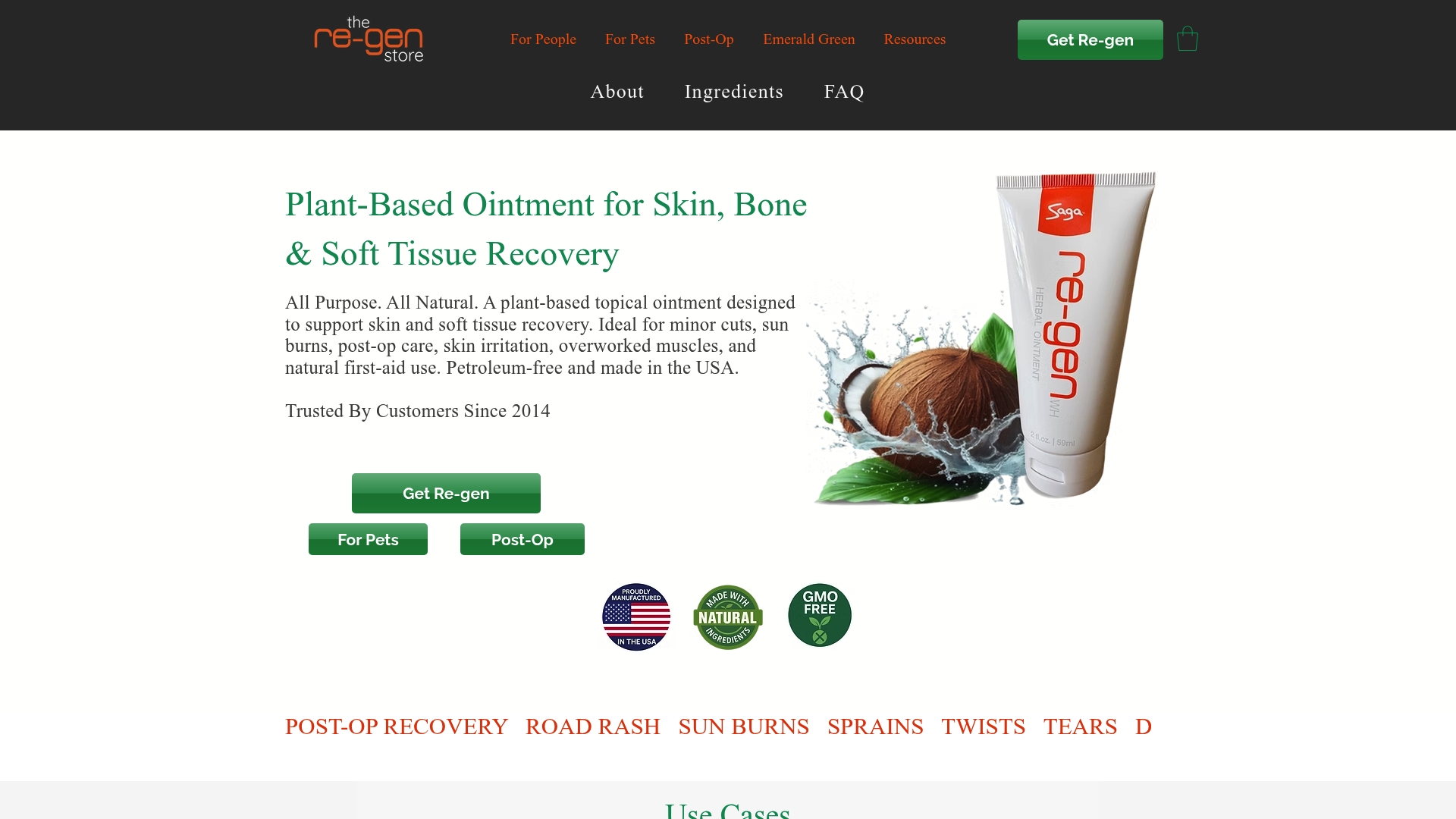
Re-gen is for topical use on clean, shallow wounds only. It is not intended for deep, infected, or puncture wounds. For readers who want a single, versatile plant-based option without the sourcing work, it covers the core use cases a natural kit demands. Visit Theregenstore to explore the petroleum-free plant-based wound treatment or go directly to the Re-gen product page to review ingredients and sizing options.
This article is general information, not medical advice. Confirm current guidelines with a qualified healthcare provider for your specific situation.
Useful sources and further reading
Mayo Clinic — First Aid Kits: Basics: clinical red-flag guidance and when to escalate to professional care.
eHome Remedies — Herbal First Aid Kit: practical item lists and starter kit recommendations.
Greater Wellness Holistics — How to Build a Natural First Aid Kit: core herb recommendations and storage organization tips.
GardenBloomVibes — Herbal First Aid: herb-specific use cases, cautions, and sustainable sourcing guidance.
Poison Control — Caution When Using Arnica Products: safety guidance on arnica topical use and labeling.
Theregenstore — Natural Wound Care: plant-based wound-care mechanisms and moist healing protocols.
FAQ
What goes in a basic natural first aid kit?
A basic kit includes aloe vera gel, calendula salve, raw honey, arnica gel, yarrow, sterile gauze, adhesive bandages, and tweezers. Pair these with a thermometer and a printed instruction card for dilution ratios and red-flag symptoms.
Are essential oils safe to apply directly to skin?
No. Most essential oils require dilution to 1–2% in a carrier oil for adult use. Undiluted application causes sensitization and skin damage. For children, use 0.5–1% dilution and avoid lavender and tea tree on young children or cats.
When should you stop using natural remedies and see a doctor?
Seek professional care if bleeding does not slow after 10 minutes of pressure, a burn blisters or covers a large area, you see signs of infection (spreading redness, pus, fever), or a sting causes breathing difficulty or throat tightening.
How long do natural first aid supplies last?
Salves and balms last 1–2 years in airtight containers; alcohol-based tinctures last 3–5 years; dried herbs retain peak potency for about 1 year. Label everything with the date opened or prepared and check your kit every six months.
Is Theregenstore’s Re-gen ointment safe for children and pets?
Re-gen is a petroleum-free, plant-based topical formulated for both human and pet use. For children and animals, apply to clean, shallow wounds only and patch-test a small area first. It is not intended for deep or infected wounds. Review full ingredient and usage details at theregenstore.com.
Recommended
Comments