
Calm Magnesium Spray Stinging Fast: 6 Step Action Plan


Most magnesium sprays sting because they’re concentrated magnesium chloride solutions, essentially a salt brine, that irritate sensitive or broken skin on contact. If your skin burns after applying it, stop, rinse the area with water, and skip your next dose until you’ve diluted the spray or patch tested a fresh area. Seek immediate medical care if you notice swelling, hives, or trouble breathing.
TL;DR:
The stinging from magnesium spray mainly occurs on skin with compromised barriers, such as shaved, sunburned, or dry areas, and is worsened by higher concentration or certain formulations.
Applying a patch test, diluting the spray, and targeting thinner skin areas can significantly reduce discomfort and prevent irritation.
Most stinging sensations peak within the first minute and subside within 10 minutes, but persistent or worsening redness requires stopping use and rinsing the skin.
Severe reactions like swelling or difficulty breathing demand immediate medical attention, especially if symptoms do not improve or worsen over time.
Evidence for systemic magnesium absorption through topical application remains inconclusive, with most benefits related to local relief rather than correcting magnesium deficiency.
Table of Contents
Why Do Magnesium Sprays Cause Tingling, Burning, or Stinging?
The sting is chemistry, not a defect in the product. Topical magnesium sprays are almost always magnesium chloride dissolved in water at fairly high concentration, which behaves a lot like the brine you’d use to cure a pickle. When that solution meets skin, particularly skin with any compromise in its barrier, the salt draws water out of surface cells and irritates the nerve endings sitting just beneath them. That’s the tingling, itching, or burning sensation you feel within seconds of spraying.
Skin condition matters more than most people expect. A patch of skin that’s freshly shaved, sunburned, windburned, or just naturally dry has fewer intact barrier cells standing between the magnesium chloride and your nerve receptors. Microscopic nicks from a razor, invisible to the eye, become tiny doorways for the salt solution to reach live tissue faster than it would on smooth, moisturized skin.
Formulation plays a role too. Some sprays add alcohol or essential oils for scent or preservation, and both can amplify the sting on top of whatever the magnesium chloride itself causes. Skin pH also factors in: healthy skin sits slightly acidic, around 4.5 to 5.5, and a concentrated mineral solution can temporarily disrupt that balance, which is part of why the same product stings one person and barely registers on another.
There’s a popular theory that people with low tissue magnesium feel a stronger sting the first few times they use a spray, as if the body is reacting more intensely to a mineral it’s short on. It’s a plausible idea, but the evidence for it is thin and mixed at best. Treat it as a possible factor, not a confirmed one.
Who Is Most Likely to Feel the Sting?
Certain conditions make stinging far more likely, and knowing yours ahead of time saves you a bad first impression with a product that otherwise works fine for most people.
Freshly shaved, sunburned, cut, or recently exfoliated skin reacts faster and harder because the barrier is already thinner.
People with eczema, psoriasis, or chronically dry skin tend to report stronger, longer-lasting stinging than those with well-hydrated skin.
Higher-concentration products sting more, and applying right after a hot shower, heavy sweating, or a long bath (when skin is more permeable) can intensify the sensation.
True allergic reactions are uncommon but possible, which is exactly why a patch test before regular use is worth the two minutes it takes.
How to Prevent or Reduce Magnesium Spray Stinging
You don’t have to choose between quitting magnesium spray entirely and gritting your teeth through it. A short, deliberate routine solves most of the problem for most people.
Patch test first. Spray a small amount on the inner forearm, wait 15 to 20 minutes, and check for redness, swelling, or lasting burning before applying it anywhere else.
Start with fewer sprays than the label suggests. Two or three sprays on your first use tells you more about your tolerance than a full application ever will.
Dilute if you’re sensitive. A common approach is mixing the spray roughly half and half with water, or blending magnesium oil with a carrier oil like coconut or jojoba, to soften the concentration.
Apply to the right places. Areas with thinner skin, like the inner arms, backs of the knees, or tops of the feet, tend to absorb it more comfortably than thicker-skinned areas, according to cosmetic chemist guidance cited by Vogue.
Avoid compromised skin entirely. Skip areas that are freshly shaved, sunburned, cut, or heavily exfoliated until they’ve healed.
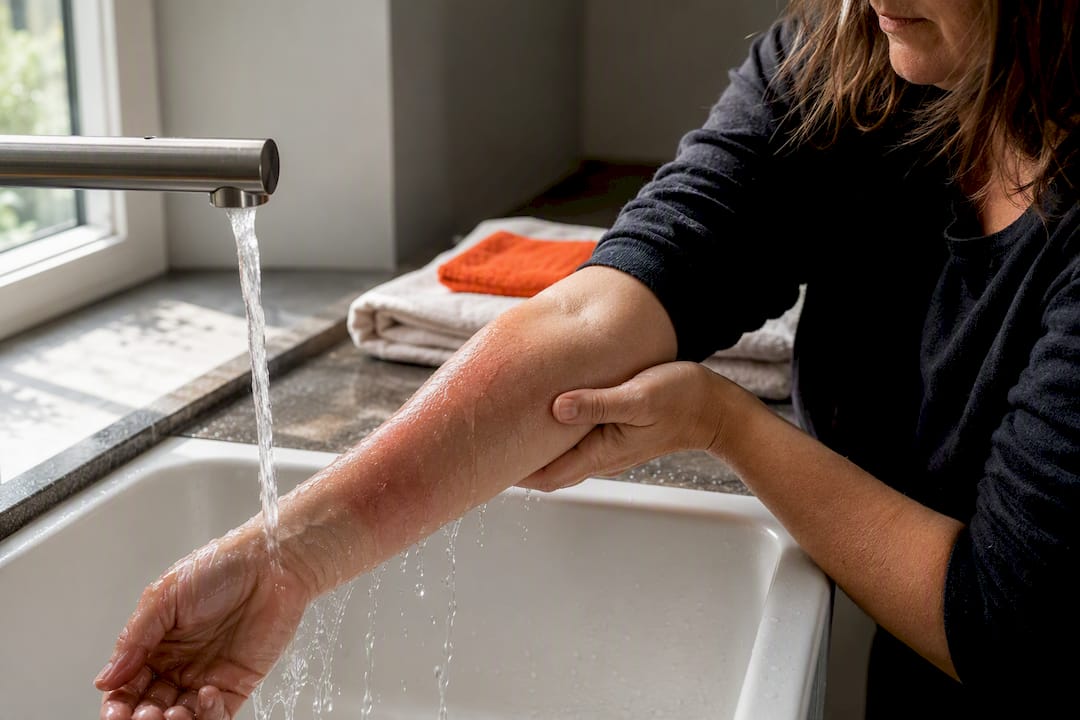
Rinse if the burn doesn’t fade. Wash the area with plain water, then apply a gentle, fragrance-free moisturizer or a soothing plant-based ointment if the skin feels irritated afterward.
If the sting fades within 5 to 10 minutes, that’s a normal, transient reaction and no cause for concern.
If it doesn’t fade, or the skin turns red and stays that way, stop use and give your skin a break before trying again at a lower concentration.
Pro Tip: Apply magnesium spray right after a shower, while skin is clean and slightly damp but not raw from scrubbing. It cuts down on grit and residue that can make the sting sharper than it needs to be.
When Should You Stop Using Magnesium Spray?
A brief sting or tingle that fades within a few minutes is the expected, harmless version of this reaction. It means the salt solution touched some sensitive nerve endings and then stopped bothering them, nothing more.
Stop use and rinse immediately if burning persists past 10 minutes, if redness spreads beyond the application site, or if you notice blisters or increasing pain. Those are signs your skin needs a break, not a higher dose next time.
Treat this as a medical emergency: difficulty breathing, swelling of the face or throat, or hives spreading across your body. Call emergency services immediately if any of these occur. For skin changes that won’t resolve, or if you manage a condition like kidney disease that affects mineral handling, talk to a clinician before continuing regular use.
What Does the Evidence Say About Topical Magnesium?
The honest answer is that the science is still catching up to the marketing. High-quality evidence that magnesium sprays meaningfully raise your body’s overall magnesium levels is limited and inconclusive, and no major health authority treats topical application as a proven substitute for oral supplementation when a true deficiency exists. That’s worth knowing before you rely on a spray bottle to fix a lab-confirmed low magnesium level.
That said, the picture isn’t dismissive. A small clinical study found that topical magnesium reduced symptoms in conditions like peripheral neuropathy and localized muscle discomfort, though the trial size and design limit how far those results generalize. Cleveland Clinic’s overview of magnesium notes that skin irritation is the most commonly reported side effect of topical use and recommends testing on intact skin before wider application. Practical guidance from cosmetic chemists lines up with that caution: apply to clean skin, start low, and increase gradually rather than dousing yourself on day one. Our own look at what topical magnesium can and can’t do covers this same gap between local relief and systemic correction in more depth.
How Long Does the Stinging Usually Last?
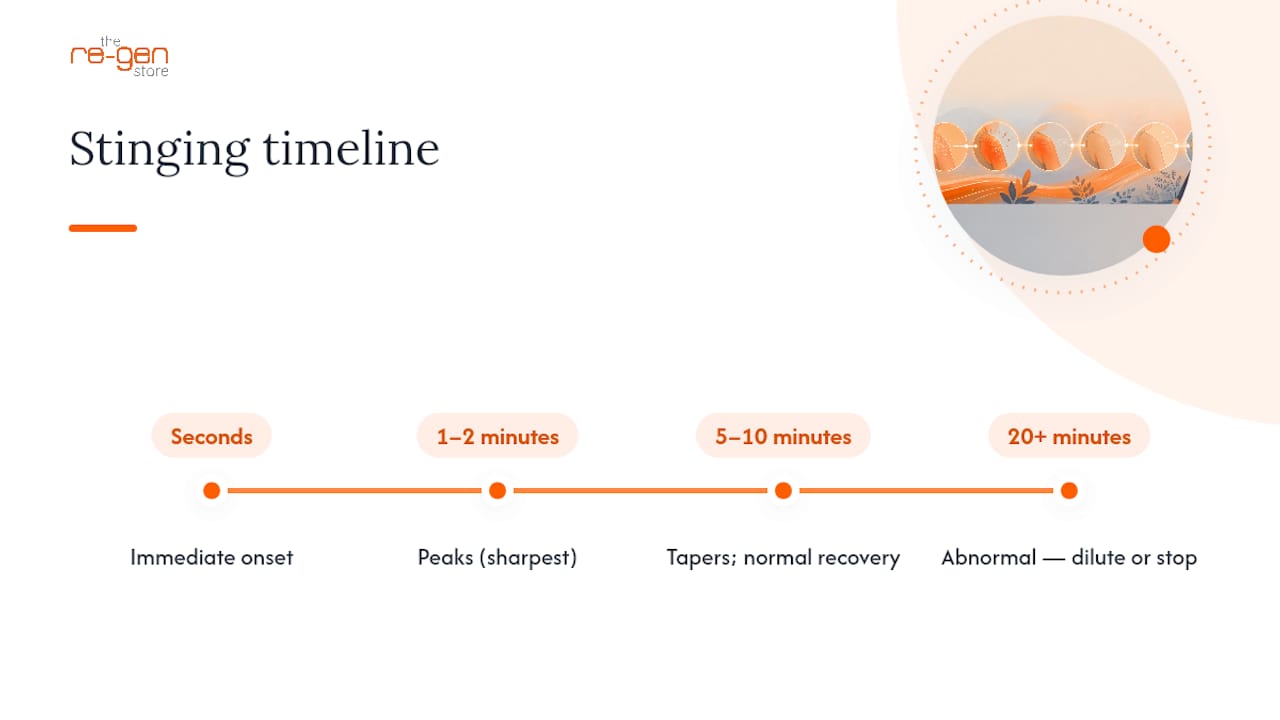
For most people, the sensation follows a predictable arc. It starts within seconds of application, peaks somewhere in the first minute or two, and tapers off within 5 to 10 minutes as the skin’s moisture balance recovers and the magnesium chloride settles in. That short, sharp curve is the signature of a normal, transient reaction rather than a warning sign.
Intensity depends heavily on where you spray it. Thin-skinned areas like the inner wrist or behind the knee often sting more sharply but recover faster, while thicker-skinned areas like the soles of the feet or forearms may feel a duller, longer sting. First-time use tends to sting more than the fifth or sixth application, since skin seems to build a mild tolerance to the sensation with repeated exposure over a week or two.
Duration outside that normal window is the real signal to watch. If burning drags on for 20 minutes or longer, or intensifies rather than fading, that points toward irritation from a compromised skin barrier or an unusually high concentration rather than a garden variety salt sting. At that point, dilution or a lower dose next time matters more than waiting it out. Readers dealing with post-shave sensitivity in particular may want to review how to repair skin after shaving/) before reintroducing a magnesium spray to that area.
Our Take on Using Magnesium Spray Safely
We’d rather you get the benefit of magnesium spray without dreading the bottle. That means patch testing every new product, diluting when your skin runs sensitive, and treating Re-gen as a plant-based option to calm skin after irritation shows up. Persistent problems deserve a conversation with a clinician, not more guesswork.
— Kyle
What to Reach for After Skin Gets Irritated
If a magnesium spray leaves your skin red, tight, or tender, you don’t need a medicine cabinet full of options, just something gentle that supports the skin while it settles back down. There are plant-based, chemical-free ointments formulated to support skin recovery, which can work as a soothing follow-up step for redness or minor irritation without introducing petroleum or synthetic additives to already-sensitized skin.

The routine is simple: rinse the irritated area, let it dry, then apply a thin layer to calm the skin while it recovers. It’s worth patch testing any new topical, Re-gen included, on a small area first, especially if you already know your skin reacts strongly to magnesium chloride. For a closer look at how the ointment compares to conventional options, visit the Re-gen product page and see whether it fits into your post-irritation routine.
This article is general information, not a substitute for advice from a qualified doctor. Consult a qualified healthcare professional about your own circumstances before acting on anything here.
Sources
FAQ
Why does my magnesium spray burn?
It’s usually the magnesium chloride concentration acting like a salt brine on your skin, which stings more on dry, broken, or freshly shaved areas.
Why does magnesium spray sting my legs specifically?
Legs often get shaved, exfoliated, or shower-scrubbed, all of which thin the skin barrier and let the concentrated solution reach nerve endings faster than it would on undisturbed skin.
Why does magnesium spray make me tingle instead of burn?
Tingling is typically a milder version of the same salt-on-skin reaction, often seen with lower concentrations, well-hydrated skin, or areas with thicker skin like the forearms.
Can too much magnesium spray hurt you?
Overuse can worsen local skin irritation, but there’s no strong evidence that topical magnesium spray causes serious systemic harm; stop use and consult a clinician if you experience severe or spreading irritation.
Recommended
Comments