
Cream for Chemical Burn: What to Apply and When

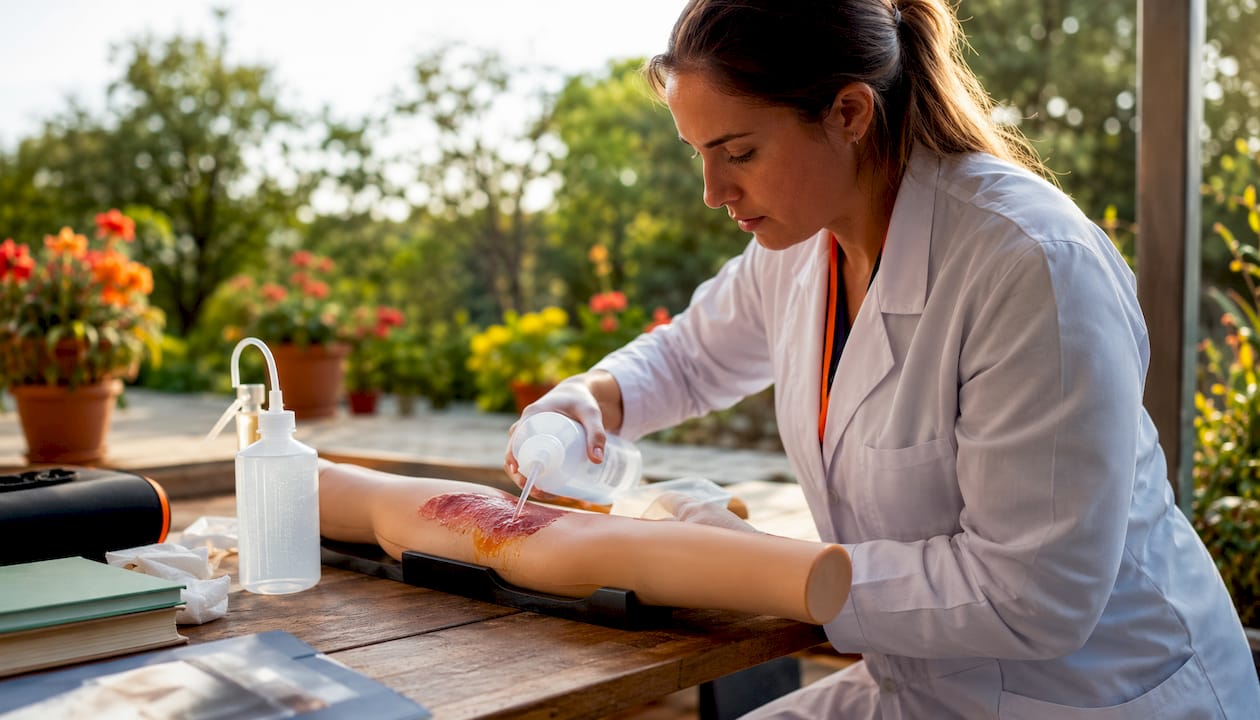
Do not apply any cream or ointment to a fresh chemical burn. The single most important first step is continuous irrigation with cool running water for at least 20 minutes to stop the chemical reaction and limit tissue damage. Only after the chemical is fully removed and a clinician has assessed the wound should any topical treatment be considered.
If you or someone nearby has been exposed to a chemical:
Call 911 immediately for large burns, difficulty breathing, or loss of consciousness
Contact Poison Control at 1-800-222-1222 for guidance on the specific chemical involved
Begin water irrigation right away — do not wait for emergency services to arrive
Remove contaminated clothing and jewelry while flushing, unless items are stuck to the skin
Once a clinician clears the wound, common topical options include petrolatum-based barriers, prescription agents like silver sulfadiazine, and in some cases plant-based ointments. The right choice depends on burn depth, the chemical involved, and your clinician’s assessment.
Table of Contents
What makes a chemical burn different from a regular burn?
A chemical burn damages tissue through an ongoing chemical reaction, not a single moment of heat. That distinction changes everything about how you treat it. With a thermal burn, the heat source is gone the moment you pull away. With a chemical burn, the agent keeps reacting with tissue until it is completely removed.
Common household and industrial sources include:
Acids: battery acid, pool chemicals, rust removers, some drain cleaners
Alkalis: bleach, oven cleaners, cement, ammonia-based products
Solvents and phenols: paint strippers, disinfectants, some industrial cleaners
Alkali burns tend to penetrate deeper than acid burns because they cause liquefactive necrosis, which means the tissue breaks down in a way that allows the chemical to keep spreading. Acid burns often self-limit by forming a coagulative barrier. Neither type should be treated with a neutralizing agent — that reaction can generate heat and worsen the injury. You can read more about types of burns and treatments to understand how chemical burns compare to other categories.
Step-by-step first aid for a chemical burn
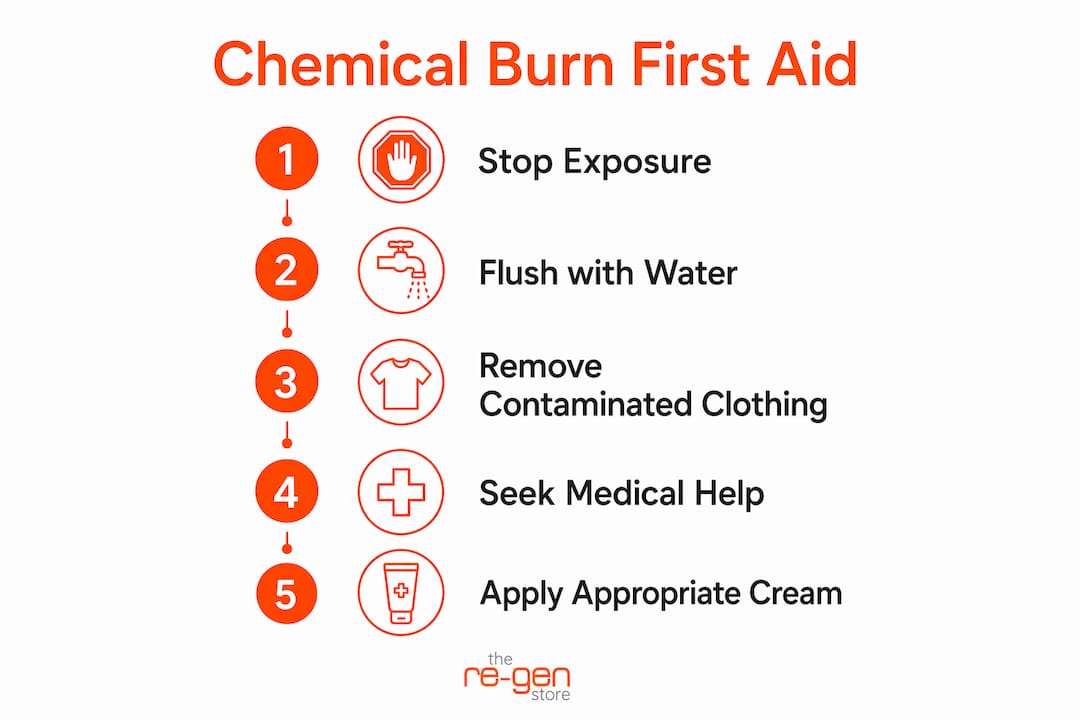
Speed and sequence matter here. Follow these steps in order:
Protect yourself first. Put on gloves or use a barrier before touching the affected person or area. Chemical agents can transfer to your skin.
Remove the source. If a dry powder is involved, brush it away gently before adding water — water can activate some dry chemicals.
Flush immediately with cool running water for at least 20 minutes. Use a shower if possible. Keep the water flowing even after the chemical appears gone.
Remove contaminated clothing and jewelry while flushing — but do not pull off anything stuck to the skin.
For eye exposure, tilt the head so the affected eye is lower, and irrigate continuously for at least 20 minutes. Seek emergency care immediately after.
Cover loosely with a clean, nonstick dressing after flushing. Do not wrap tightly.
Seek medical evaluation. Even burns that look minor can be deeper than they appear.
Pro Tip: Keep the water temperature cool, not cold. Ice water can cause additional tissue damage and should never be used on any type of burn.
Do not attempt to neutralize the chemical with baking soda, vinegar, or any other household substance. The resulting exothermic reaction can intensify the injury.
When to call 911 or Poison Control right away
Some chemical burns require emergency care, not home management. Call 911 immediately if you notice:
Burns covering a large area of the body
Burns on the face, hands, feet, genitals, or over a major joint
Difficulty breathing, swallowing, or speaking
Signs of shock: pale skin, rapid pulse, confusion, or fainting
Chemical contact with the eyes
Burns from hydrofluoric acid, phenols, or other industrial agents
The person is a child, elderly, or has a significant health condition
Contact Poison Control (1-800-222-1222) for any chemical exposure, even if the burn looks minor. The specialists there can advise on whether the specific chemical requires emergency care, special antidotes, or extended irrigation. Always tell responders what chemical was involved — that information directly affects treatment decisions.
Chemical burns from certain agents like hydrofluoric acid require treatments beyond standard irrigation and cannot be managed with general-purpose creams.
Which topical creams and ointments do clinicians use after decontamination?
After full decontamination and a clinical assessment, topical treatment becomes appropriate. The right product depends on burn depth, infection risk, and the chemical involved. Here are the main categories clinicians use:

Topical Option | Type | Typical Use Case |
Petrolatum (petroleum jelly) | OTC barrier | Minor, superficial burns after cleaning |
Silver sulfadiazine (Silvadene) | Prescription | Moderate burns with infection risk |
Bacitracin / polymyxin B combinations | OTC antibiotic | Clinician-directed use for minor wounds |
Aloe vera gel | OTC soothing agent | Superficial burns, comfort only |
Calcium gluconate paste | Prescription/emergency | Hydrofluoric acid burns specifically |
Plant-based ointments (e.g., Re-gen) | OTC natural | Post-clearance support for minor burns |
Petrolatum is the most commonly recommended barrier for minor cleaned burns. A thin layer of petroleum jelly with a nonstick bandage keeps the wound moist, protects against contamination, and prevents the dressing from adhering to healing tissue.
Silver sulfadiazine is a prescription cream used in burn centers for moderate burns where infection risk is elevated. It is not an OTC product and should not be self-applied without clinical direction. Burn centers apply topical antibiotics or silver-containing dressings based on clinical assessment, not as a default.
OTC topical antibiotics (bacitracin, neomycin, polymyxin B combinations) are sometimes used for minor wounds, but clinicians often discourage unsupervised use on fresh chemical burns. They can obscure wound appearance and interfere with clinical assessment.
Aloe vera is widely cited as a soothing option for superficial burns. It may reduce discomfort and provide mild anti-inflammatory support, but it is not a substitute for clinical wound care on anything deeper than a very minor surface irritation.
Ceramide-containing hydrophilic creams represent a different approach. Research on hydrophilic cream formulations suggests that the base of a wound cream affects healing — hydrophobic bases can interfere with the natural repair process, while hydrophilic vehicles may support it more effectively. The role of ointments in recovery is worth understanding before choosing a product.
What you should never put on a chemical burn
Avoiding the wrong treatment is just as important as applying the right one. These actions can worsen tissue damage or delay proper care:
Neutralizing agents (vinegar, baking soda, lemon juice): attempting to counteract an acid with a base or vice versa can trigger an exothermic reaction, generating heat and deepening the burn
Butter, oils, or cooking fats: trap heat and bacteria, increasing infection risk
Toothpaste: a common home remedy with no clinical basis; can irritate damaged tissue
Hydrogen peroxide or rubbing alcohol: slow the healing process and damage fragile new tissue
Any cream or ointment before decontamination: applying a product before the chemical is fully removed can trap the agent against the skin and worsen injury
Popping blisters: blisters are a protective barrier; breaking them opens the wound to infection
Pulling off stuck material: if clothing or dressing is adhered to the wound, leave it for a clinician to remove
The NHS guidance is direct on this: nothing goes on the wound until the chemical is fully washed away and a clinician has assessed the injury.
Home wound care after clinical clearance
Once a clinician clears you for home care, a consistent daily routine supports healing and reduces infection risk.
Daily care steps:
Gently clean the wound with mild soap and cool water
Pat dry with a clean cloth — never rub
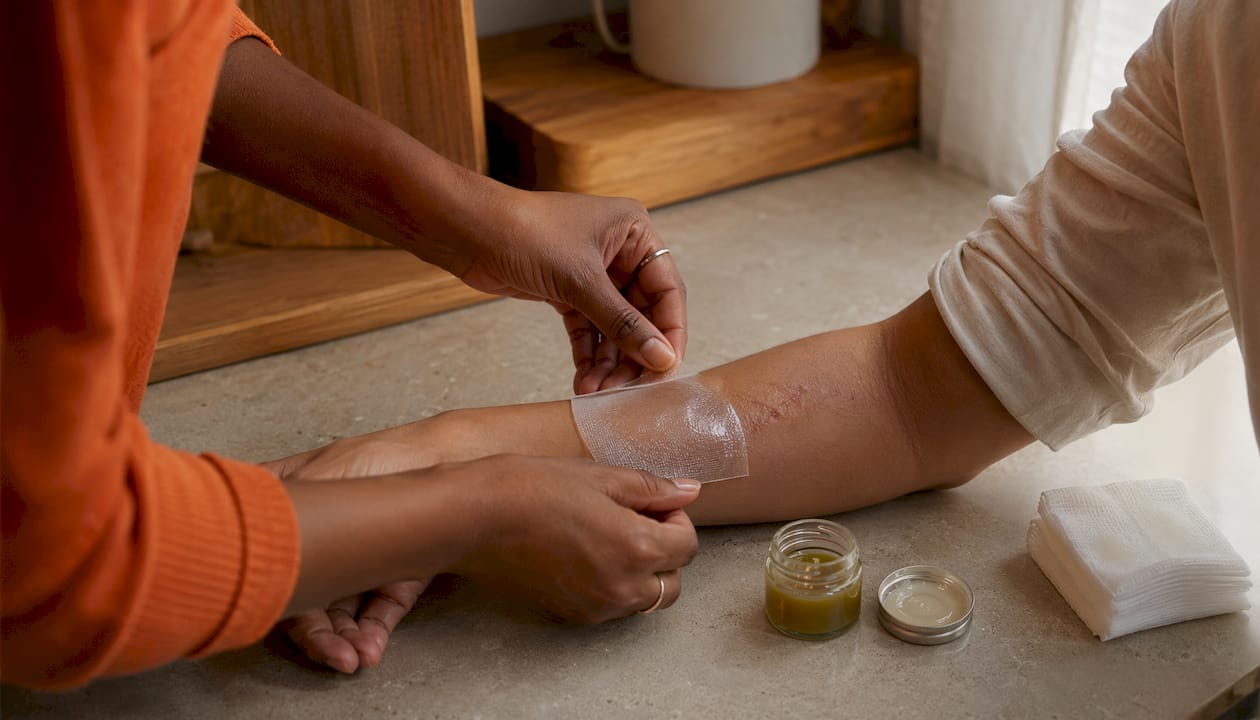
Apply a thin layer of your clinician-approved ointment (petrolatum or an approved alternative)
Cover with a nonstick dressing; change as directed, typically once or twice daily
Avoid sun exposure on healing skin — new tissue burns easily
Signs of infection to watch for:
Increasing redness, warmth, or swelling around the wound
Pus or cloudy discharge
Fever above 100.4°F
Wound that is not improving or is getting larger
Pain control: OTC analgesics like acetaminophen or ibuprofen are appropriate for mild to moderate discomfort. More significant pain may require prescription management — discuss this with your clinician at the follow-up visit.
Healing timeline by severity:
Minor superficial burns: days to 2 weeks
Partial-thickness burns: 2–6 weeks, depending on depth and care
Full-thickness or deep burns: months; often require specialist care or grafting
Keeping the wound moist with appropriate ointment and a nonstick dressing supports the skin’s natural repair process and reduces pain during dressing changes. Natural approaches to skin recovery can complement clinician-directed care once the wound is stable.
When does a chemical burn need a burn center?
Not every chemical burn can be managed at an emergency department. Burn center referral is appropriate when:
The burn covers a significant surface area
Full-thickness (third-degree) damage is present or suspected
The burn affects the face, hands, feet, genitals, perineum, or a major joint
The eyes or airway are involved
The chemical is a specialized agent (hydrofluoric acid, phenols, concentrated sulfuric acid)
The patient has diabetes, immune compromise, or other comorbidities that affect healing
Electrical injury is also present
Hydrofluoric acid deserves a specific note. It penetrates tissue and binds calcium, causing systemic toxicity that goes beyond the visible wound. Topical calcium gluconate is a standard part of treatment for HF burns — a generic moisturizing cream is not an appropriate substitute. Poison Control can help triage whether a burn center is needed before you arrive at an ED.
How Re-gen fits into safe chemical burn recovery
Re-gen is a plant-based, petroleum-free regenerative ointment from Theregenstore, designed to support skin and soft tissue recovery. For chemical burns specifically, it belongs at one stage only: after the wound is fully decontaminated and a clinician has cleared it for topical care.
Never apply Re-gen to an unwashed or actively contaminated burn. Like any topical product, applying it before the chemical is removed can trap agents against the skin and worsen the injury.
Post-clearance application steps:
Wash hands thoroughly before touching the wound
Confirm clinician clearance for home topical care
Apply a thin layer of Re-gen to the cleaned, dry wound
Cover with a nonstick dressing if directed
Repeat as instructed, typically once or twice daily
Re-gen’s plant-based, petroleum-free formulation offers a different base than conventional petrolatum products. For readers who prefer to avoid petroleum-derived ingredients, it represents a petroleum-free wound care option worth discussing with your clinician. Some natural skincare approaches, including tallow-based balms, also reflect growing interest in traditional, non-synthetic wound care bases.
Re-gen is a consumer topical product. It is not a substitute for prescription treatments like silver sulfadiazine for moderate or severe chemical burns, and it does not replace clinical evaluation. For minor burns that have been professionally assessed and cleared, it may support the skin recovery process.
Pro Tip: If you have sensitive skin or known plant allergies, review Re-gen’s ingredient list with your clinician before applying it to a healing burn. Ingredient sensitivity is a real consideration for any topical product on compromised skin.
Key Takeaways
Never apply any cream to a fresh chemical burn: flush with cool running water for at least 20 minutes first, then seek clinical evaluation before choosing any topical treatment.
Point | Details |
Irrigate first, always | Flush with cool running water for at least 20 minutes before anything else touches the wound. |
Call for help early | Poison Control (1-800-222-1222) and 911 are your first contacts for any significant chemical exposure. |
Clinician clearance before creams | No topical ointment, including petrolatum, should be applied until the wound is fully decontaminated and assessed. |
Match the product to the burn | Petrolatum for minor burns, silver sulfadiazine for moderate burns (prescription), calcium gluconate for HF acid — the chemical and depth determine the choice. |
Re-gen for post-clearance support | Theregenstore’s plant-based Re-gen ointment is a petroleum-free option for minor burns after professional decontamination and clinical clearance. |
The part most people get wrong about chemical burns
Most people instinctively reach for something to put on a burn. A cream, a gel, something soothing. That instinct is understandable, but for chemical burns it is the wrong move at the wrong moment. The danger is not the pain you feel — it is the reaction still happening under the surface.
What strikes me about the guidance from burn centers is how consistent it is: water first, everything else second. Not aloe, not petroleum jelly, not a plant-based ointment. Water. The simplest intervention is also the most effective one, and it is the one people are most likely to skip because it feels too basic.
There is also a tendency to treat “natural” as automatically safe. Aloe vera, plant oils, herbal preparations — these are not harmful in the right context, but applying anything to an incompletely decontaminated wound can trap the chemical and extend the injury. The safety of any topical product, natural or otherwise, depends entirely on the wound being clean first. That is the standard Theregenstore’s Re-gen is designed to meet: a post-clearance option, not a first-response one.
This article is general educational information, not a substitute for emergency care or professional medical advice. For any chemical exposure, contact Poison Control at 1-800-222-1222 or call 911 for your specific situation.
Re-gen: a plant-based option for post-clearance skin recovery
After the emergency is over and your clinician has cleared the wound for home care, what you apply next matters for recovery. Re-gen from Theregenstore is a petroleum-free, plant-based ointment formulated to support skin and soft tissue repair — without the synthetic ingredients found in conventional barrier products.

Re-gen is not a first-response product. Use it only after the wound is fully decontaminated and a clinician has approved topical home care. For minor chemical burns that meet that standard, it offers a natural alternative to petrolatum-based ointments, with a hydrophilic base that may suit readers who prefer to avoid petroleum-derived ingredients.
Safety first, always: if your burn is moderate or severe, follow your clinician’s prescription plan. Re-gen supports recovery for minor, clinician-cleared wounds. Visit Theregenstore’s plant-based wound care page to review the full ingredient list and application guidance, or go directly to the Re-gen product page to learn more.
Useful sources and emergency contacts
Chemical burns: First aid | Mayo Clinic
Acid and chemical burns | NHS
Chemical burns: Symptoms, causes & treatment | Cleveland Clinic
Chemical Burns: Care Instructions | MyHealth Alberta
Management of chemical injuries | NCBI Bookshelf
Poison Control (U.S.): 1-800-222-1222 — available 24/7 for chemical exposure guidance
Emergency: Call 911 for large burns, breathing difficulty, or loss of consciousness
For burn center referral, your emergency department can coordinate transfer based on burn severity and the chemical involved
FAQ
What is the fastest way to heal a chemical burn?
The fastest path to healing starts with complete decontamination: flush with cool running water for at least 20 minutes, then get a clinical evaluation. After clearance, keeping the wound moist with a clinician-approved barrier ointment and a nonstick dressing supports the skin’s natural repair process.
What ointment is good for chemical burns?
After full decontamination and clinical clearance, petrolatum is the most commonly recommended barrier for minor burns. For moderate burns, clinicians may prescribe silver sulfadiazine. Plant-based options like Re-gen from Theregenstore are appropriate for minor, clinician-cleared wounds in readers who prefer petroleum-free products.
What should you put on a chemical burn to help it heal?
Nothing should go on a chemical burn until the chemical is fully washed away and a clinician has assessed the wound. After that, a thin layer of petrolatum or a clinician-approved ointment with a nonstick dressing is the standard approach for minor burns.
Can I put Aquaphor on a chemical burn?
Aquaphar and similar petrolatum-based products are not appropriate until the wound is fully decontaminated and a clinician has cleared it for home care. Once those conditions are met, a petrolatum barrier can help keep the wound moist and protect healing tissue — but confirm with your clinician first.
Recommended
Comments