
Coral Cut Treatment: Clean It Fully, Then Support Healing


The best coral cut treatment is thorough cleaning right away, a protective covering, and daily care until the skin closes. Coral leaves living tissue and fine debris in a wound, so these cuts heal more slowly than an ordinary scrape. Clean it well, keep it covered, and watch it closely. Once it is clean, we designed Re-gen, our plant-based ointment, to support your skin’s recovery.
TL;DR
Get out of the water, then wash the cut with soap and clean running water to remove coral particles.
Cover it with a clean, non-stick dressing and change it at least once a day, or sooner if it gets wet or dirty.
Coral wounds can take weeks or months to heal, so keep caring for them after the first day.
Watch for spreading redness, warmth, swelling, pus, red streaks or fever. These mean you need a doctor.
Once the wound is clean, a plant-based ointment such as Re-gen can support the skin as it repairs.
Table of Contents
What to do in the first minutes
The CDC advises leaving the water as soon as you get a cut. It also says to wash open wounds thoroughly with soap and clean running water after contact with salt water. Then follow these steps:
Wash your hands and put on gloves if you have them.
Remove large pieces of debris with tweezers you have cleaned first, as NewYork-Presbyterian’s health library describes.
Wash the wound with soap under running water. Scrub gently with a washcloth. The aim is to lift out the fine coral dust and the soft living film that coral leaves behind.
Rinse again with plenty of clean fresh water.
Dry the area, apply a thin layer of ointment and cover it with a dry, sterile, non-stick dressing.
Check your tetanus status. Mayo Clinic says you need a tetanus shot if the wound is deep or dirty and you have not had one in the past five years.
The most common mistake is a quick rinse followed by a bandage. Coral particles left inside keep the wound inflamed, so the cleaning step is the one to take your time over.
Peroxide, soap or plain water?
Readers find conflicting advice here, so it helps to know why. Divers Alert Network (DAN), which focuses on dive medicine, describes a rinse with half-strength hydrogen peroxide (half peroxide, half water) after scrubbing, followed by another fresh-water rinse. Its purpose is to help clear coral debris. NewYork-Presbyterian’s guidance for coral scrapes lists the same step.
Other medical sources take a gentler line for everyday wound care. Mayo Clinic says peroxide and iodine can irritate a wound. Kaiser Permanente says peroxide and alcohol can slow healing.
A practical way to read this:
Right after the injury: a thorough soap-and-water scrub does the main work. If you use the diluted peroxide rinse, do it once, then rinse it off with fresh water.
On later days: wash with clean water about twice a day. You don’t need to keep using peroxide.
If a crust forms: DAN notes that wet-to-dry dressing changes using saline or a diluted antiseptic (1% to 5% povidone-iodine in disinfected water) may be used for a few days.
One myth to drop: iodine will not make coral grow in a wound. Urine is also a bad idea, because it can make some marine injuries worse.
If the wound is from fire coral, which stings, the National Park Service says rubbing alcohol or meat tenderizer may ease the pain.
Why coral cuts heal slowly
Coral is covered in soft living material that tears easily off the rigid, abrasive structure underneath. DAN explains that this material gets deposited into the cut. That causes inflammation and sometimes starts an infection, which greatly prolongs healing.
In practice, a coral scrape that looks minor on day one can still be irritated on day ten. Kaiser Permanente says these wounds may take weeks or months to heal completely. Don’t read slow progress as failure. Read it as a sign that the wound needs steady, patient care.

Caring for the wound over the following weeks
A simple daily routine covers most of what the wound needs:
Wash gently with clean water and mild soap about twice a day.
Pat dry and apply a thin layer of ointment.
Cover with a non-stick dressing. Change it at least once a day, and whenever it gets wet or dirty.
Keep the wound out of the ocean and out of brackish water until it has closed.
This is where we come in. Re-gen is a plant-based, petroleum-free ointment made with a blend of 10 herbal ingredients. We formulated it to support the recovery of skin and soft tissue, and many people use it on cuts and scrapes after cleaning. You can read more about plant-based wound treatment and how we think about natural remedies for cuts. Our guide to a scraped knee uses the same clean, cover and heal routine.
Once the wound has closed, the new skin often feels dry or sensitive. A skin barrier repair routine helps you rebuild comfort and moisture in the area.
If your dog or cat picked up a cut from rocks or reef while swimming, the same logic of cleaning first and covering applies. Our guide on healing pet cuts safely explains our approach for animals.
Signs you need a doctor
Saltwater wounds carry a risk that freshwater cuts don’t. Vibrio bacteria live naturally in coastal salt and brackish water. The CDC says some people become infected when an open wound is exposed to that water. Cuts and scrapes from aquatic activity count as open wounds.
The CDC reports that 150 to 200 Vibrio vulnificus infections are reported in the US each year, and about 20% of them are fatal. Most cuts never become infected, but the risk is real enough that you should know the warning signs.
Contact a doctor promptly if you notice any of these, based on guidance from Kaiser Permanente and Mayo Clinic:
Increasing pain, swelling or warmth
Spreading redness or red streaks
Pus or other drainage
Fever, chills or unusual fatigue
Bleeding that soaks through the bandage
DAN adds that a wound that heals poorly or keeps draining pus, with swollen lymph glands, can signal coral poisoning. Call 911 for fainting, swelling of the tongue or throat, trouble breathing, confusion or severe pain.
Higher-risk groups. DAN warns that people with an impaired immune system, such as from AIDS, diabetes or chronic liver disease, can become seriously ill or die from a Vibrio infection after a coral wound. If that is you, see a doctor about any coral wound, early. The Virginia Department of Health also notes that in people with compromised immune systems the bacteria can reach the bloodstream.
Antibiotics are a doctor’s decision. The CDC says early antibiotic treatment improves survival in severe V. vulnificus infections. Don’t wait for lab confirmation once a clinician suspects it. Ask your doctor whether you need an antibiotic. Some can make skin more sensitive to sun, so use sunscreen while taking them, as the National Surfing Safety Institute notes.
Our perspective
Most people treat a coral cut as an emergency for ten minutes and then forget it. The cleaning matters most, but the weeks after matter too. A wound that is slow to heal needs daily attention, a clean covering, and something kind to the skin. That is why we made Re-gen. It is a plant-based, petroleum-free ointment built on a blend of 10 herbal ingredients, designed to support the regeneration of skin, muscle and bone. We think a person who prefers natural ingredients should not have to give up a sensible wound routine to follow that preference. Clean thoroughly, cover well, watch for infection, and give your body steady support while it repairs. Kyle
Re-gen for your wound-care routine
Re-gen is our plant-based regenerative ointment for skin and soft tissue recovery. We make versions and guidelines for both people and pets. Our Emerald Green line is available as a spray and in a press-cap bottle, if you prefer a no-touch application. Shipping is a flat rate of $3.
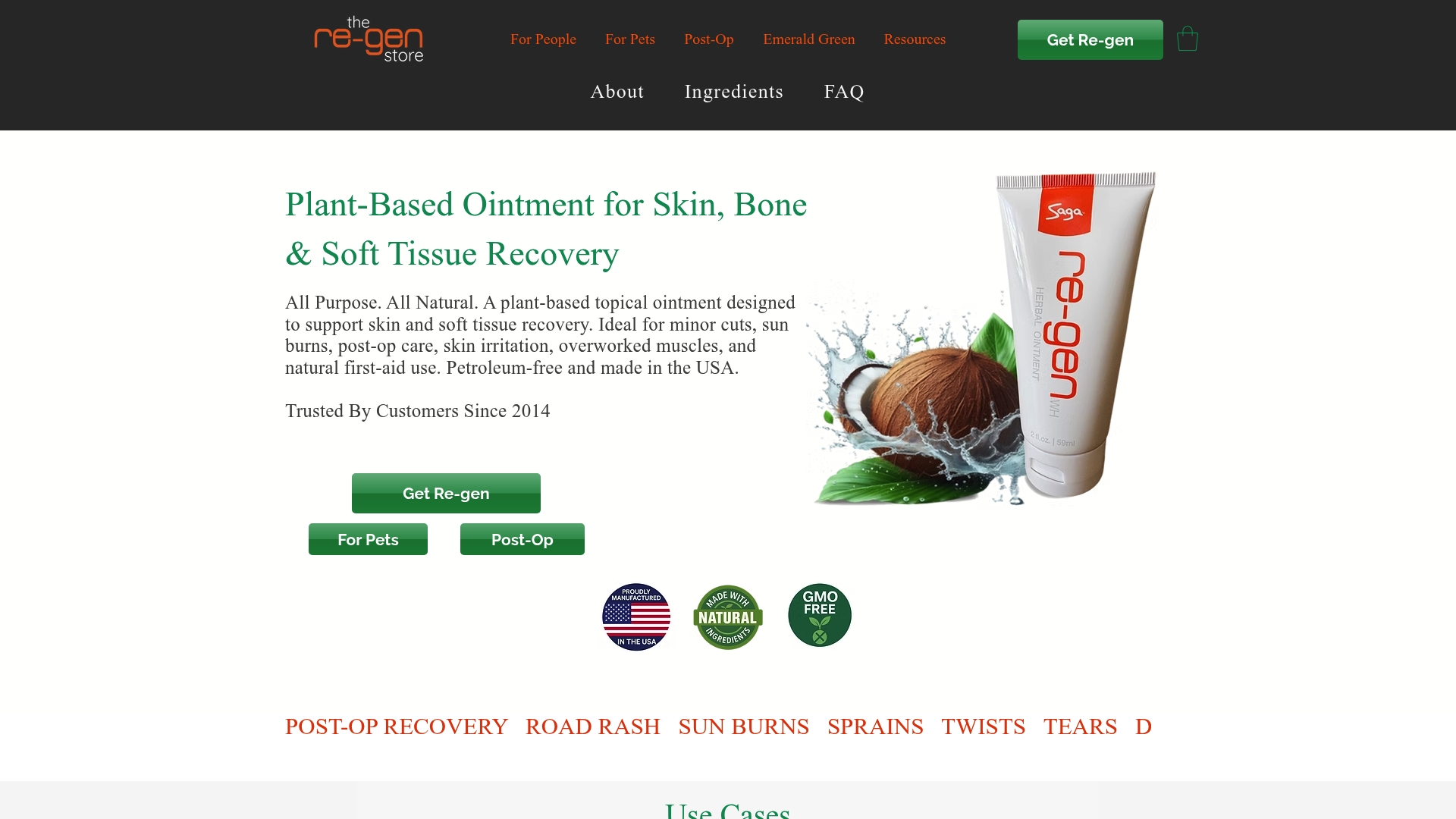
See the full range at The Re-gen Store, or go straight to Re-gen ointment. If you are recovering from surgery, our surgery recovery page is a good place to start.
FAQ
How long do coral scrapes take to heal?
Often weeks or months. Coral material left in the wound inflames the tissue and slows repair. Thorough cleaning at the start and regular dressing changes give the wound the best chance of closing steadily.
What happens if you get a cut from coral?
You get a scrape or laceration that can contain living coral tissue and debris. It may swell, sting and itch, and it can become infected if debris stays in. Clean it quickly and watch it over the next days.
What antibiotic should I use for a coral cut?
That is for a doctor to decide. DAN says ciprofloxacin is a common oral antibiotic that is usually effective against Vibrio, but you should talk to a health professional before starting one. See one promptly if you have signs of infection or a weakened immune system.
Should I keep a coral cut covered?
Yes. A thin layer of ointment under a clean, non-stick dressing protects the wound. Change the dressing at least once a day and whenever it gets wet or dirty.
Sources
Recommended
Comments